

The future of travel
The automotive industry is undergoing significant change, with electric drive technologies playing an increasingly important role in many markets.
According to a 2026 evaluation published by the Technical University of Munich in the White Paper “Defossilization instead of Decarbonization”, which analysed 19 scientific studies covering 47 scenarios, battery-electric vehicles showed, on average across the scenarios assessed, around 41% lower life-cycle greenhouse gas emissions than comparable vehicles with combustion engines.
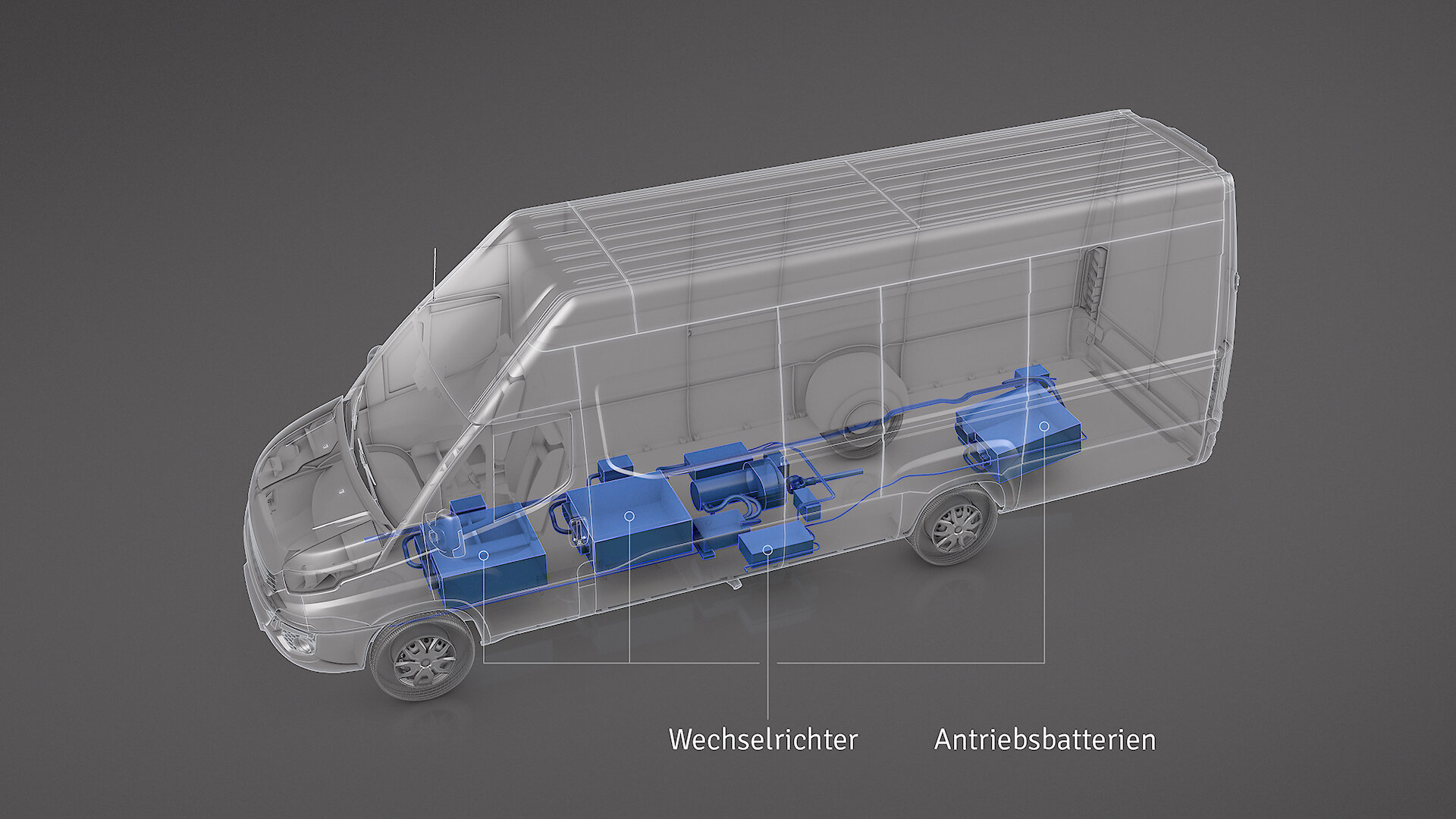
For many years, the Erwin Hymer Group has explored the possibilities of alternative drive technologies and alternative drive technologies to reduce CO₂ emissions during driving. The study "Dethleffs eHome" was a first step: The first exclusively electronically powered motorhome has been manufactured based on an Iveco eDaily.
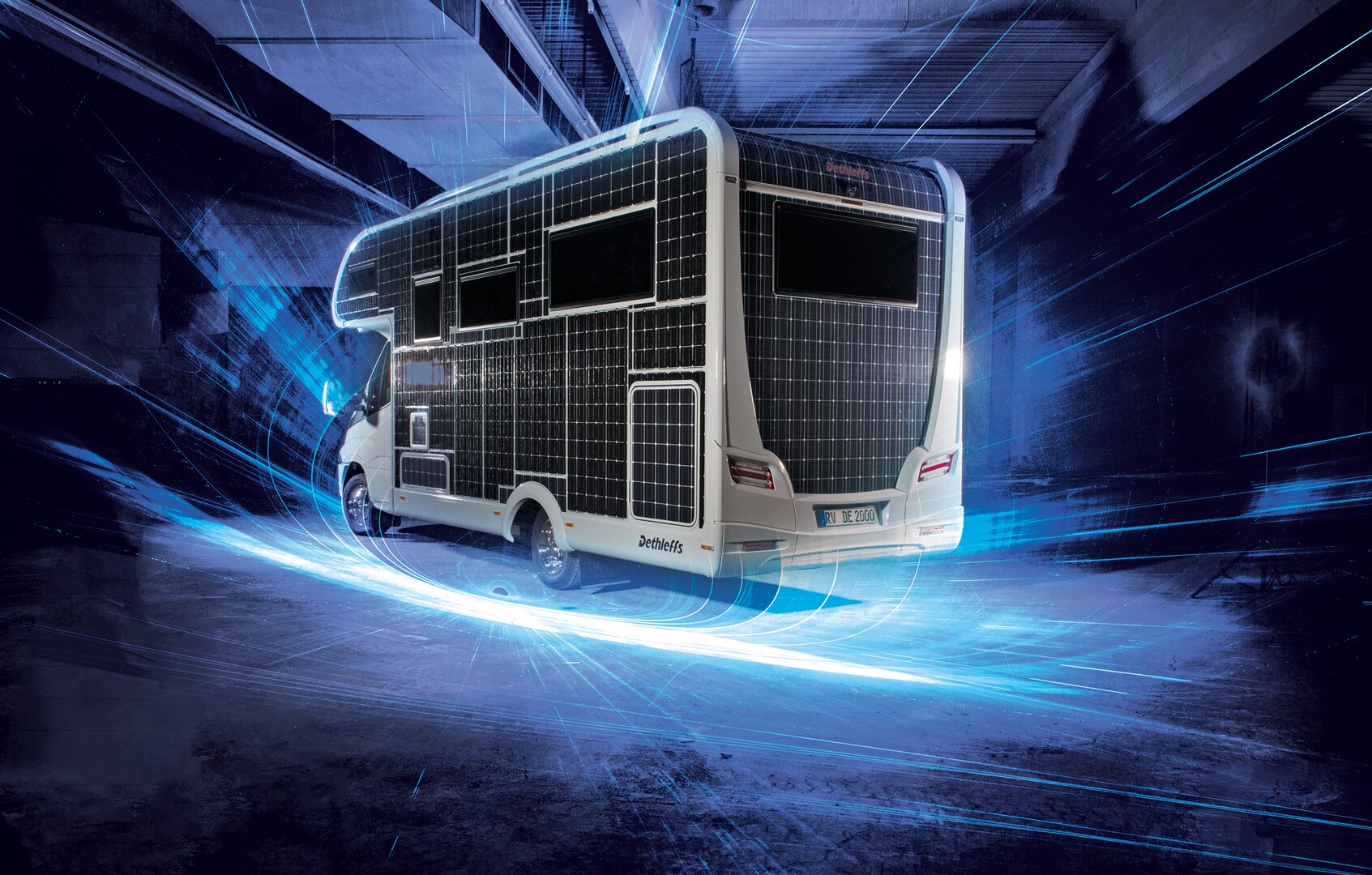
All-electric Travel
The performance of electric drivetrains and battery systems has advanced significantly in recent years. Modern lithium-ion batteries now provide practical driving ranges for electrically powered motorhomes and camper vans, depending on the vehicle concept and intended use. At the same time, research institutions and industry are working on new battery technologies with higher energy density. These include solid-state batteries, lithium-sulfur batteries, and other innovative battery systems. In the future, such technologies could enable larger energy storage capacities at the same weight, further increasing the range of electric vehicles.
Charging Infrastructure
Charging infrastructure for electric vehicles in Germany has advanced significantly in recent years. According to the German Federal Network Agency (Bundesnetzagentur), more than 212,000 publicly accessible charging points were available nationwide by the summer of 2026. Of these, around 55,700 were fast-charging points and approximately 156,400 were standard charging points.
The expansion of charging infrastructure is also continuing across Europe. The aim is to steadily increase the availability of charging points along major transport corridors, thereby supporting the adoption of electric mobility for both everyday use and long-distance travel.
Charging Times
Charging times for electric vehicles have decreased significantly in recent years. Modern fast-charging systems now enable a substantial reduction in charging stops, depending on the vehicle model and the available charging infrastructure.
Many current electric vehicles can be charged from approximately 10% to 80% battery capacity in around 20 to 30 minutes at high-power fast-charging stations. Actual charging times depend on various factors, including the vehicle, battery technology, and specific charging conditions.